Protecting Your Business and Workers: Navigating New Lead Regulations with Citadel EHS
California's OSHA is enforcing stricter airborne lead exposure limits for workers effective January 1, 2025. The PEL decreases from 50 to 10 micrograms per cubic meter, creating additional project requirements.
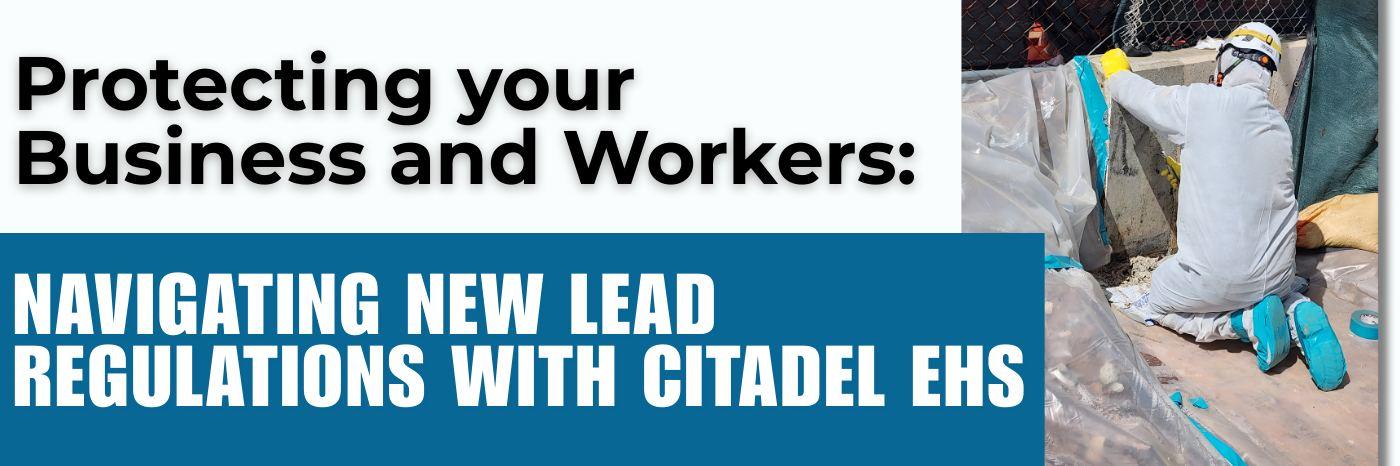
As an industry leader in environmental consulting, Citadel EHS maintains extensive experience managing environmentally regulated materials. Upcoming regulatory changes affect worker safety and project management on construction sites containing lead-based materials — particularly renovations of pre-1979 buildings.
Key Changes Effective January 1, 2025
California's Occupational Safety and Health Administration is enforcing stricter airborne lead exposure limits for workers:
- The Permissible Exposure Limit (PEL) will decrease from 50 ug/m3 to 10 ug/m3
- The Action Limit (AL) will lower from 30 ug/m3 to 2 ug/m3
These reductions mean more workers will exceed the exposure thresholds, even for tasks previously compliant. Employers must conduct more frequent exposure monitoring and increase compliance efforts, including medical monitoring, respiratory protection, and expanded training.
Changes in Training and Certification Requirements
Under new rules, workers exposed at or above the PEL are required to have California Department of Public Health (CDPH) training and certification:
- Lead Workers: 24-hour training course, must work under certified Lead Supervisor
- Lead Supervisors: 40-hour course plus CDPH exam certification
- Both positions require bi-annual continuing education and certification fee payment
Work achievable with 2 hours of training on December 31, 2024, will in many cases require at least 3 days of training, plus certification, on January 1, 2025.
Impact on Project Scope and Costs
As compliance requirements expand, many non-hazardous materials contractors may discontinue lead-related work, shifting responsibilities to specialized hazardous materials contractors. This transition increases project complexity, costs, and demand for specialized labor to meet Cal-OSHA standards.
Related sectors