BlogNovember 21, 2025

SCAQMD Rule 1466 Dust Monitoring Simplified

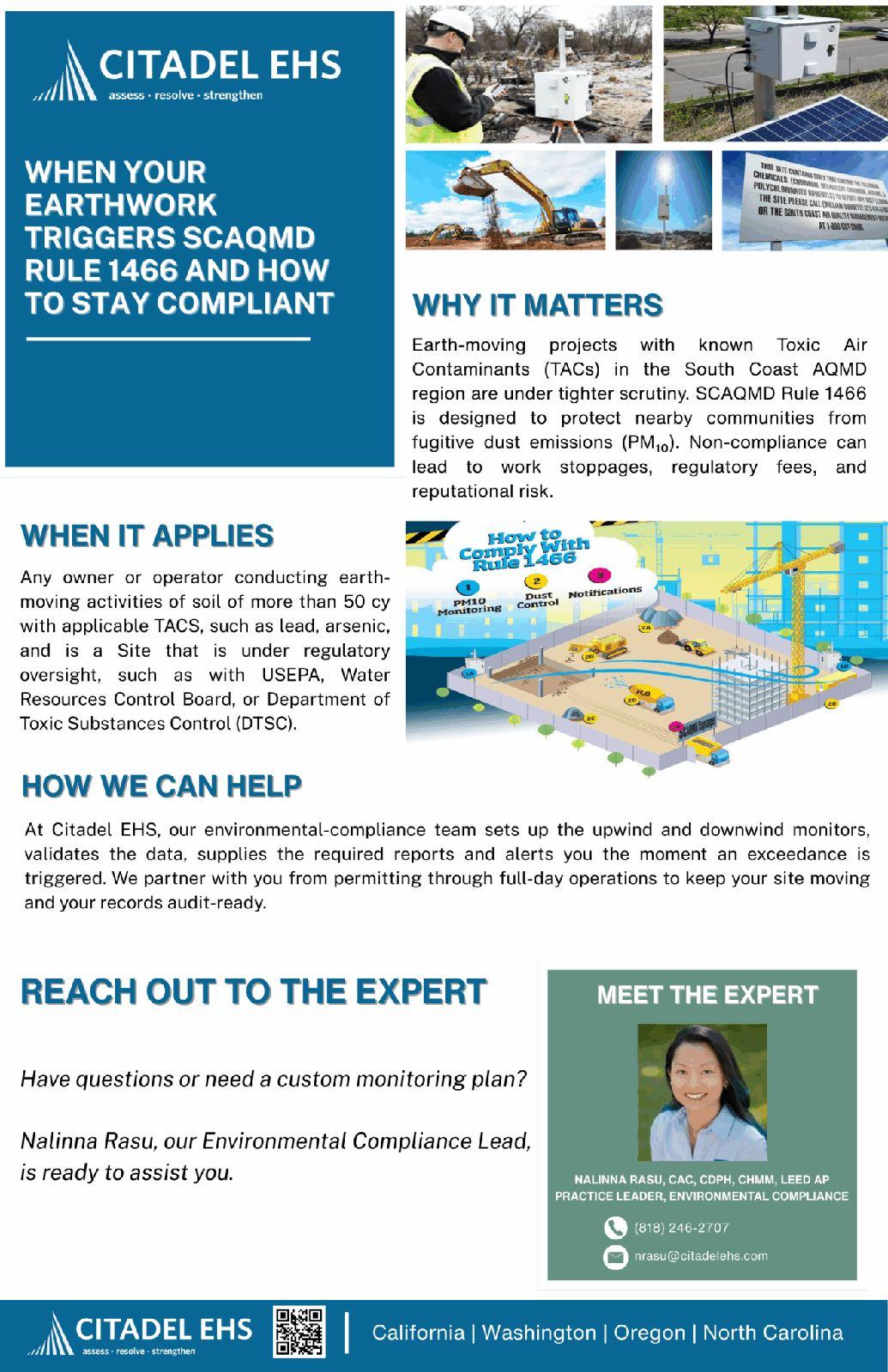
Earth-moving projects containing known Toxic Air Contaminants in the South Coast AQMD region face increased regulatory scrutiny. SCAQMD Rule 1466 targets fugitive dust emissions (PM10) to protect nearby communities.
SCAQMD Rule 1466 Dust Monitoring Simplified

Why It Matters

Earth-moving projects containing known Toxic Air Contaminants (TACs) in the South Coast AQMD region face increased regulatory scrutiny. SCAQMD Rule 1466 targets fugitive dust emissions (PM10) to protect nearby communities. Non-compliance carries serious consequences including work stoppages, regulatory penalties, and reputational damage.

When Rule 1466 Applies

The regulation applies to any owner or operator conducting earth-moving activities of soil of more than 50 cubic yards with applicable TACs, such as lead and arsenic, when the site operates under regulatory oversight from entities like the USEPA, Water Resources Control Board, or Department of Toxic Substances Control (DTSC).

How Citadel EHS Can Help

Citadel EHS's environmental compliance team manages the complete monitoring process: installing upwind and downwind monitors, validating data, generating required reports, and alerting clients immediately upon exceedance detection. Their services span from permitting through full operational oversight to maintain compliance documentation.

Contact Nalinna Rasu, Environmental Compliance Lead, at nrasu@citadelehs.com.

More in Blog

September 15, 2026

$73 Million Approved for Zero-Emission Trucks & Infrastructure

The South Coast AQMD Governing Board has approved $73.1 million through the WAIRE Mitigation Program to support zero-emission Class 4-8 trucks, zero-emission yard trucks, and related charging and fueling infrastructure. Eligible applicants include warehouse operators, fleet operators, and infrastructure providers serving warehouses, with funding prioritized for communities where WAIRE fees were collected.

August 17, 2026

Completing an SPCC Plan in Oregon and Washington: What Facility Operators Need to Know

If a facility stores oil above federal thresholds and a spill could reasonably reach navigable waters, an SPCC Plan may be required under 40 CFR Part 112 -- and Oregon and Washington facilities often have additional state spill-reporting and industrial stormwater obligations to coordinate alongside it. This guide covers what belongs in an SPCC Plan and how to align it with state permitting requirements.

August 11, 2026

Contaminated Media Management Plans: Keeping Construction Projects Moving in Oregon and Washington

Construction projects on former industrial, commercial, or redevelopment sites don't always start with clean soil and groundwater, and a Contaminated Media Management Plan developed before construction begins can protect workers and the public while reducing costly delays. This guide covers what a CMMP should include and how it coordinates with construction stormwater and NPDES requirements in California, Oregon, and Washington.

Work with us

Have Questions?

Our team of EHS&S experts is here to help with your environmental, health, and safety needs.