Wildfire and Combustion By-Products in Buildings: Testing, Cleanup, and Verification
When structures burn in wildfires, they leave residues extending beyond visible ash. For EHS&S and facilities managers, the challenge involves exposure management and defensible documentation.
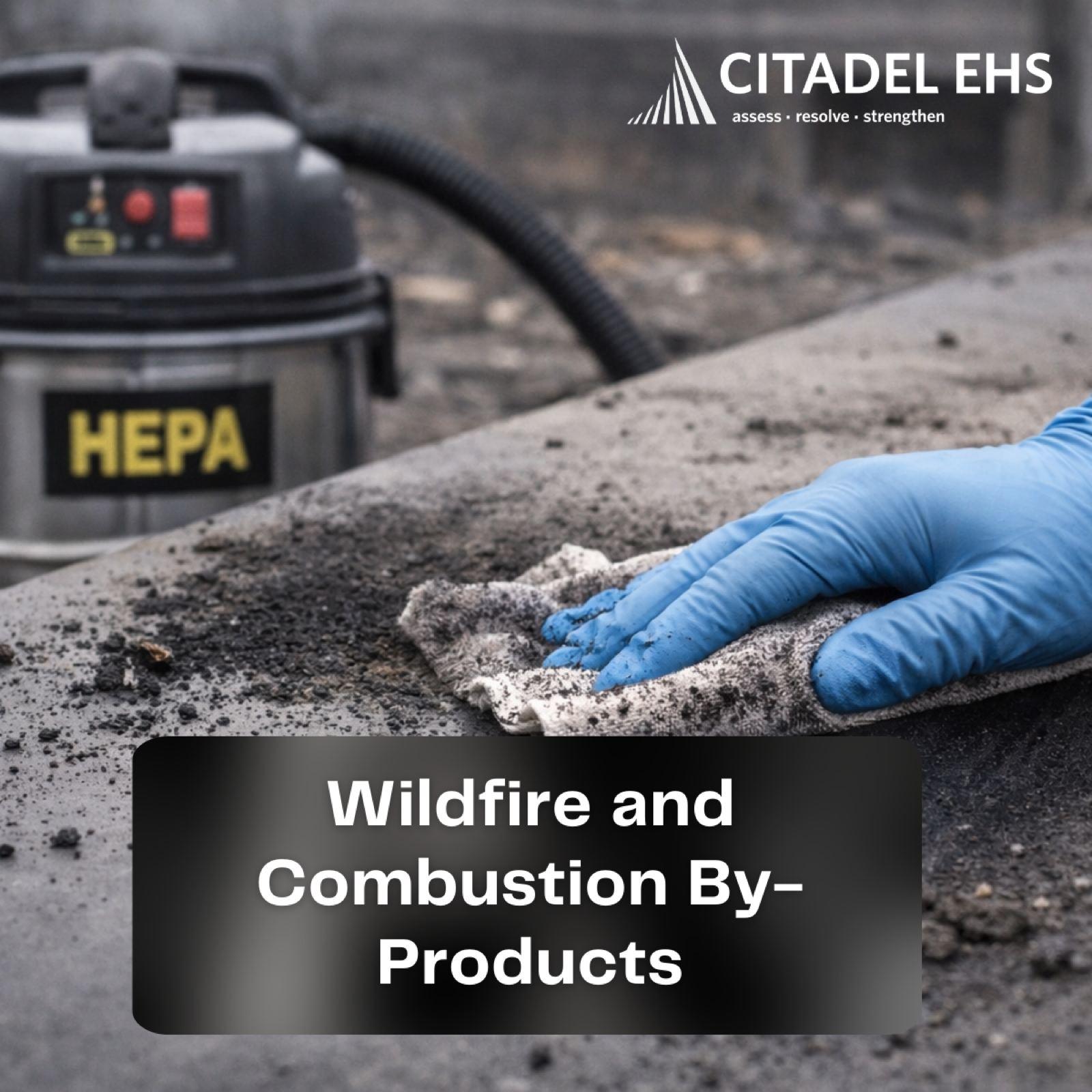
Overview
When structures burn in wildfires, they leave residues extending beyond visible ash. Smoke and debris contain particulate matter (char, ash, soot) and combustion by-products that settle on outdoor surfaces, infiltrate buildings, and persist after the smoke clears.
For EHS&S and facilities managers, the challenge involves more than cleanup — it requires exposure management and defensible documentation addressing: what was affected, what corrective actions occurred, and how effectiveness was verified before reoccupancy.
Key Takeaways
- Combustion residues vary by site based on materials burned and deposition locations
- Treat wildfire residue as an exposure pathway (inhalation, skin contact, tracking), not merely housekeeping
- Employ testing strategically — sample when results will modify cleaning scope, reoccupancy decisions, or worker protections
- Prioritize HVAC systems (intakes, filters, coils, fan rooms) as both contamination pathways and control points
- Document and verify thoroughly; credible post-cleaning records reduce uncertainty for occupants, insurers, and regulators
What Are Combustion By-Products After Wildfire?
Post-wildfire residue commonly labeled "ash" is misleading. Properties may encounter:
| Category | Significance |
|---|---|
| Particulate residues | Char, ash, soot tracking indoors and re-suspension during cleaning |
| Organic compounds | PAHs and semi-volatile organic compounds from synthetic material combustion |
| Metals | Present in deposited ash; varies by burned materials and site conditions |
| Asbestos-containing debris | May appear if older building materials were affected |
Why It Matters for Facilities and EHS&S
Facilities face dual risks: occupant exposure and complaints (particularly for sensitive groups like children, elderly individuals, or patients) and worker exposures during cleanup.
Key exposure pathways include inhalation of fine particles, skin contact with contaminated surfaces, and residue tracking into unaffected areas. HVAC systems can draw in fine particulates and redistribute them if filtration and cleaning aren't addressed.
When Assessment and Testing Are Warranted
Testing provides greatest value when it will alter decisions. Use these triggers to determine when escalation from visual assessment to targeted testing makes sense:
- Visible soot/ash deposition, especially around outdoor air intakes, loading docks, and entries
- Persistent odor or recurring residue indoors following initial cleaning
- HVAC system evidence (heavily loaded filters, soot in mechanical spaces, deposits at diffusers)
- Sensitive occupancy (healthcare, childcare, senior facilities) or critical operations
- Insurance, legal, or transactional requirements demanding pre/post documentation
Rule of thumb: If identical actions would proceed regardless of lab results, skip sampling. When results will determine scope, methods, or reoccupancy timing, targeted sampling adds objective support.
Practical Assessment Workflow
A defensible process typically follows: scope, inspect, clean, verify, document.
Scope and Background
- Document event context (dates, proximity to burn area, wind/smoke conditions)
- Define building use, occupancy type, and vulnerable populations
- Identify high-deposition zones: roofs, exterior horizontal surfaces, entries, loading areas, outdoor air intakes
- Distinguish between porous materials (carpet, upholstery, ceiling tiles) and non-porous surfaces (sealed hard surfaces)
Walkthrough Inspection
- Exterior: deposition patterns, entryways, docks, outdoor air intakes, yards/vehicles that may track residue indoors
- Interior: horizontal settling surfaces, high-touch zones, storage areas, porous materials where dust accumulates
- HVAC: filter condition, fan rooms, coils, accessible ducting, pressure dynamics affecting infiltration
Targeted Sampling (When Warranted)
Common approaches involve surface wipe sampling on representative non-porous surfaces and dust sampling (micro-vacuum methods) where dust accumulation matters and decisions depend on findings. Most defensible sampling plans support a "before versus after" narrative using consistent locations and surface types.
Common analytes selected based on scenario:
- Particulate indicators and microscopy to characterize soot/ash presence
- Metals analysis (scenario-dependent; frequently used where significant ash deposition or vulnerable populations exist)
- Asbestos analysis where older building materials may be involved and disturbance is possible
- Targeted organics (PAHs/SVOCs) when synthetic material combustion is suspected or persistent odor/residue concerns exist
Cleanup and Remediation Principles
Effective wildfire cleanup removes residue without spreading it. Methods should match surfaces, occupancy sensitivity, and impact severity.
- Employ HEPA-filtered vacuuming and damp wiping on non-porous surfaces
- Avoid dry sweeping or dry dusting, which re-aerosolize fine particles
- Implement containment and zoning for larger areas to prevent cross-contamination
- Control tracking (entry controls, shoe/boot cleaning, staged work zones)
- Treat HVAC filtration as an immediate control measure (upgrade filtration where feasible; document filter changes)
HVAC-Specific Considerations
- Inspect outdoor air intakes and mechanical rooms for visible deposition
- Replace filters promptly; consider higher-efficiency filtration where system capacity permits
- Inspect and clean coils and fan compartments when impacted (follow manufacturer guidance)
- Verify operating modes reducing infiltration during smoke events (pressure control and outdoor air settings)
Worker Health and Safety During Cleanup
Fire cleanup differs from routine housekeeping. Employers must evaluate hazards and implement protections for workers performing cleanup, removal, demolition, and reconstruction in fire-damaged areas.
- Execute task-based hazard assessment (what's being disturbed, methods, duration)
- Prioritize engineering and administrative controls (containment, wet methods, HEPA) before PPE
- Establish a compliant respiratory protection program if respirators are necessary
- Train workers on hazards, proper cleanup methods, decontamination, and tracking prevention
- Verify waste handling and disposal requirements for debris and contaminated materials
Verification and Documentation for Reoccupancy
No universal "safe" numeric threshold exists for wildfire residue across all settings. Verification should align with building use and the decision being made.
Minimum recommended documentation includes:
- Scope statement and objective (reoccupancy, verification, insurance, worker exposure assessment)
- Walkthrough notes and photos (as appropriate)
- Cleaning methods used and responsible parties
- Worker protection measures during cleanup
- Sampling plan (if used), laboratory reports, and interpretation narrative linked to decisions
- Corrective action log and closure confirmation (reinspection and/or retesting)
Practical Checklist
- Establish objective: reoccupancy decision, cleanup verification, insurance documentation, or worker exposure assessment
- Identify and protect outdoor air intakes and high-traffic entry points; plan tracking controls
- Inspect exterior deposition zones and interior settling surfaces; include mechanical rooms and HVAC components
- Determine whether testing will alter actions; if yes, develop targeted sampling plan
- Clean using HEPA and damp methods; avoid dry sweeping/dusting
- Address HVAC filters and impacted components early; document filter condition and changes
- Verify outcomes (inspection and/or targeted sampling) and document decisions
Related services
Topics