Client

BH Luxury Residences LLC
Location
Beverly Hills, CA
Primary Service
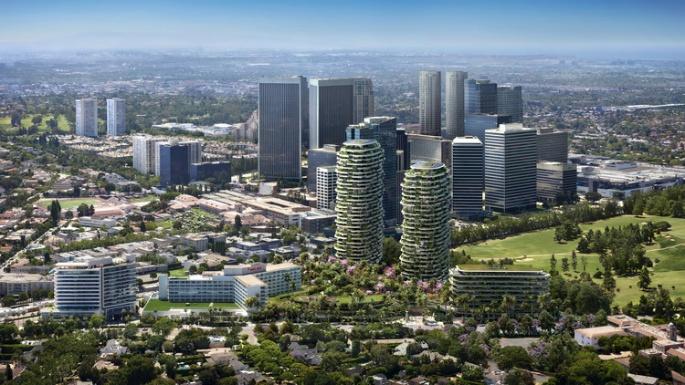
Engineering & Environmental SciencesOne Beverly Hills is a transformative luxury hospitality and residential development located at the western gateway to Beverly Hills at Wilshire and Santa Monica Boulevards. The approximately 17.4-acre project site encompasses the Beverly Hilton, Waldorf Astoria Beverly Hills, adjacent development parcels, and the former service station property at 9988 Wilshire Boulevard. The broader redevelopment plan integrates new hotel and residential development, extensive landscaped open space and amenities, a conference center, below-grade parking, and enhancements to the existing Beverly Hilton.
Citadel EHS provided multidisciplinary environmental consulting to support redevelopment of the 9988 Wilshire portion of the property, helping address environmental conditions associated with the site's historic operation as a service station and prepare the property for its integration into the larger development.
The Challenge
Redeveloping a former fueling facility within a high-profile luxury hospitality development required careful management of both known and potential subsurface environmental conditions.
The property had a long history of petroleum-related environmental investigation and remediation. As redevelopment moved forward, the remaining underground storage tanks and associated infrastructure needed to be removed, environmental conditions evaluated, and regulatory requirements addressed without unnecessarily impeding construction activities.
The stakes extended beyond conventional site closure. The property is being incorporated into a prominent hospitality development, with portions of the former service station site planned for the entrance driveway serving a new hotel, a guard shack, and access associated with subterranean parking.
Citadel's Solution
Citadel provided environmental and building sciences services through multiple phases of redevelopment.
Prior to demolition, Citadel conducted an environmentally regulated materials survey of the former service station, evaluating asbestos-containing materials, lead-containing materials, PCBs, universal and electronic wastes, radioactive materials, and ozone-depleting substances within areas affected by the planned demolition.
Citadel subsequently provided environmental oversight during the removal of three 12,000-gallon gasoline underground storage tanks and one 520-gallon used-oil tank, along with associated fueling infrastructure. Citadel performed confirmation sampling during the removal process to evaluate remaining soil conditions.
Following tank removal, Citadel worked with the Los Angeles Regional Water Quality Control Board to further evaluate subsurface conditions. The investigation included utility clearance and geophysical investigation, advancement of soil borings, collection and laboratory analysis of soil and groundwater samples, installation of temporary soil vapor probes, and soil vapor sampling.
Citadel collected 26 soil samples, evaluated groundwater conditions, and installed nested soil vapor probes to characterize petroleum hydrocarbons and volatile organic compounds at depth.
Navigating Environmental Conditions During Active Redevelopment
A particularly important aspect of Citadel's work was adapting the investigation to an evolving construction site. Ongoing construction and changing access conditions required Citadel's team to adjust boring locations and field activities while maintaining the technical objectives of the investigation. The final report concluded that these field adjustments did not significantly affect the investigation findings.
This flexibility allowed environmental investigation and regulatory work to progress alongside redevelopment activities rather than becoming an unnecessary obstacle to the larger project.
The Outcome
Citadel's investigation defined the remaining environmental conditions and provided the technical basis for moving the property toward regulatory closure.
Although residual petroleum hydrocarbons and volatile organic compounds were identified at depth, Citadel concluded that the impacts were limited and vertically defined. Based on the planned use of the property and the investigation results, Citadel recommended regulatory case closure and no additional site investigation.
By integrating building sciences, environmental investigation, UST closure support, subsurface characterization, and regulatory coordination, Citadel helped transform a legacy environmental property into a site positioned to support the next generation of luxury hospitality development in Beverly Hills.
Highlights:
- Environmental consulting supporting the One Beverly Hills luxury hospitality and mixed-use redevelopment
- Pre-demolition asbestos, lead and environmentally regulated materials assessment
- Oversight and confirmation sampling during removal of four underground storage tanks
- Soil, groundwater and soil vapor investigation
- Regulatory coordination with the Los Angeles Regional Water Quality Control Board
- Environmental recommendations tailored to the property's future hotel and redevelopment use
- Environmental work coordinated around ongoing construction activities
- Recommendation for regulatory case closure and no additional site investigation
Explore
Related on this site
Related Work
Explore More Projects

Start a project
Facing something similar on your project?
Tell us where things stand. We'll route you to the practice leaders who've handled it before — typically within one business day.